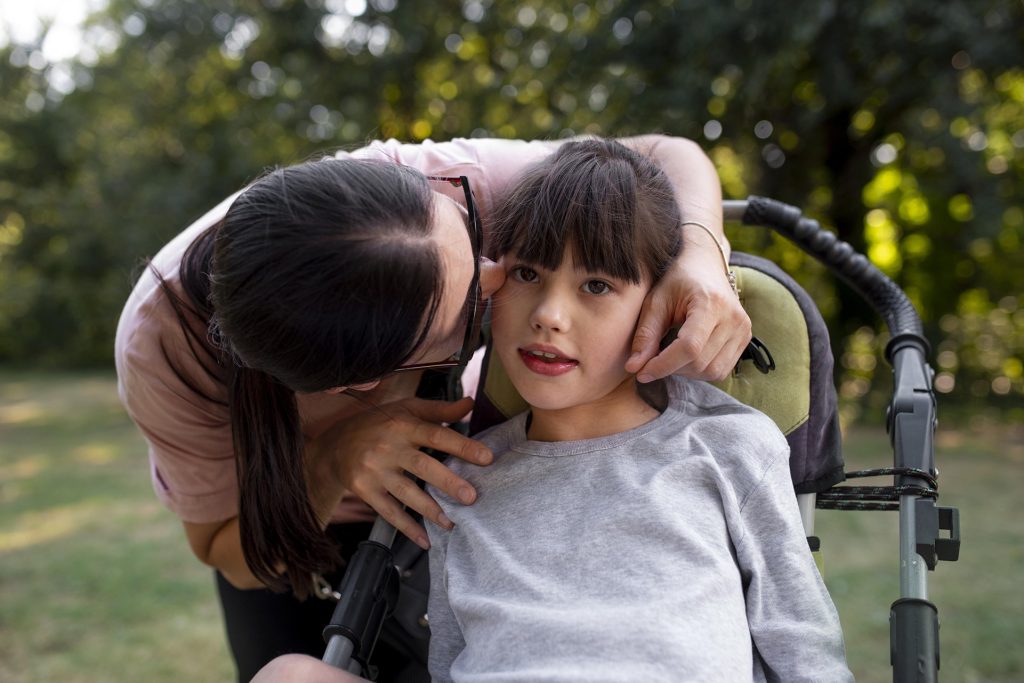

About Promoting Independence and Wellbeing in Cerebral Palsy.
What is the history of cerebral palsy? What are the prenatal, perinatal, and postnatal factors of CP? What is the difference between non-progressive and progressive? What is the difference between Spastic CP, Dyskinetic CP, and Ataxic CP? What are the different levels of CP? What impact can CP have on the brain and brain development? What impact can CP have on the developmental milestones? What is the difference between gross motor skills and fine motor skills? What are some of the day-to-day challenges individuals with CP deal with? How does CP affect an individual’s quality of life? What support is available for pain management?
Our Promoting Independence and Wellbeing in Cerebral Palsy (CP) course will help you to answer the questions above and more.
Cerebral Palsy (CP) is a group of non-progressive neurological disorders that manifest in early childhood and primarily affect an individual’s motor function and posture. It is estimated that approximately 2.1 per 1,000 live births in the UK are affected by CP, making it the most common physical disability in childhood.
Through our Promoting Independence and Wellbeing in Cerebral Palsy (CP) course, you will gain an understanding of what cerebral palsy is. You will learn the history of CP. You will learn the different causes of cerebral palsy in the individual’s stages of life. You will learn the different causes, types, and symptoms of non-progressive and progressive CP. You will learn the different levels of CP and what they involve. You will learn the signs and symptoms of the different types of CP. You will learn how CP affect they brain anatomy and brain development. You will learn the impact CP has on gross and fine motor skills. You will also learn the challenges individual’s living with CP may face in their day-to-day life.
Who is Promoting Independence and Wellbeing in Cerebral Palsy for?
Our Promoting Independence and Wellbeing in Cerebral Palsy course is for anyone who works with/ cares for individuals with diagnosed CP as well as anyone that would like to gain some knowledge about CP. Whatever care or non-care sector you work in our session will provide you with the knowledge to understand CP and how it affects an individual’s day-to-day life.
What are the learning outcomes?
- Discuss the different types of CP.
- Discuss the different treatment strategies available.
- Recognise the challenges individuals with CP face daily.
- Be able to understand the impact CP has on the brain and its development.
- Demonstrate the use of different assessments to aid an individual with CP.
- Develop knowledge, skills, and strategies that will increase your knowledge about cerebral palsy as well as the aids available.