July 14, 2026 min
15 min
🎧 Listen now on:
Spotify,
Apple Podcasts,
or watch on
YouTube.
In this solo episode of the Able to Care Podcast, Andy Baker unpacks one of the most emotionally charged challenges in dementia care and adult support services – what to do when someone refuses personal care.
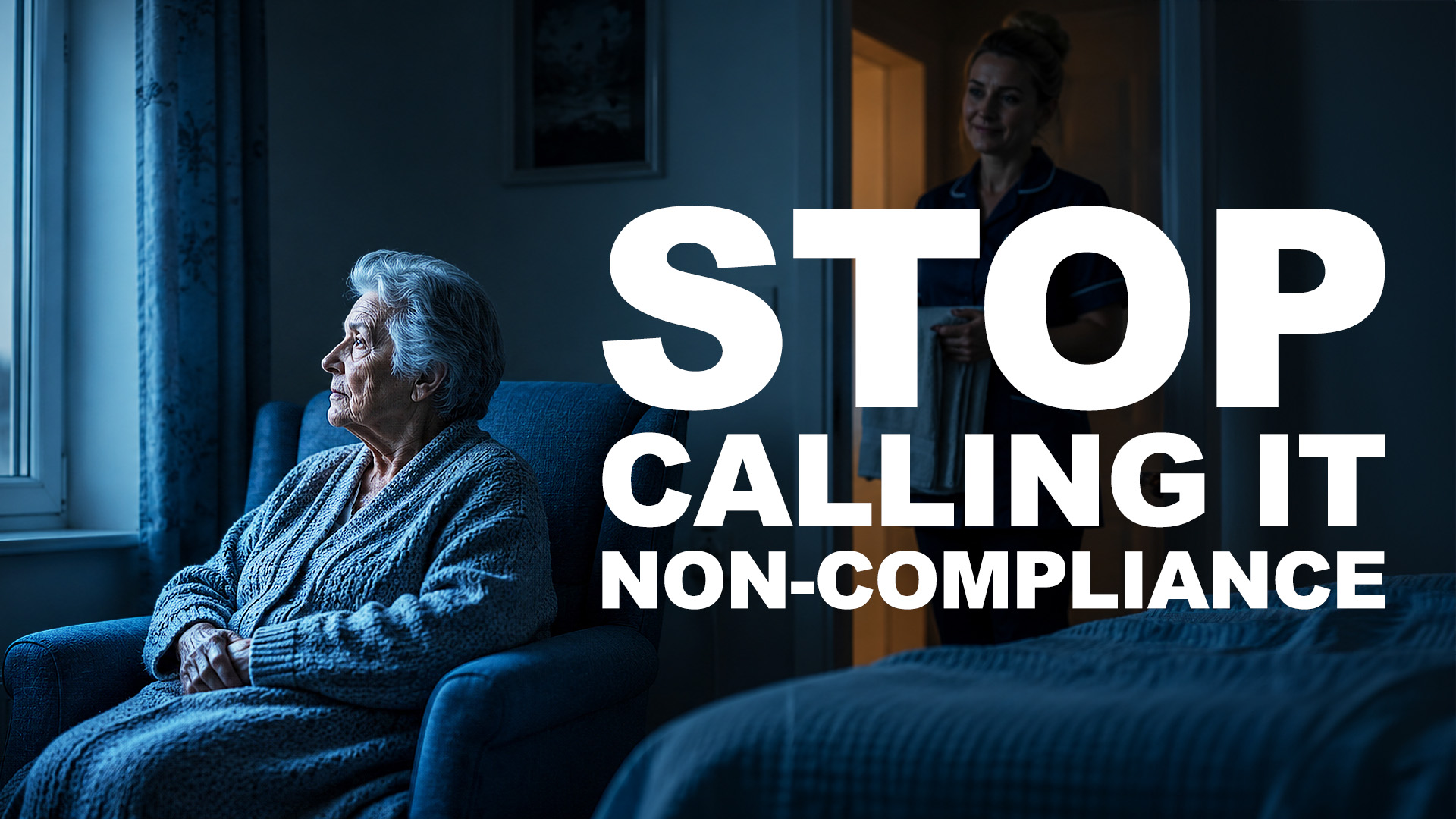
Whether it is washing, changing, medication support or another care task, refusal is often framed as “difficult behaviour” or “non-compliance”. But in reality, refusal is usually communication. It may be a sign of fear, pain, sensory discomfort, trauma, confusion, embarrassment, loss of control or a threat to dignity.
This episode explores how carers, support workers, care home teams and family caregivers can move away from force and frustration and towards a more trauma-informed, person-centred approach that reduces distress and strengthens trust.
Andy breaks down why personal care can feel threatening for a person living with dementia or other cognitive, sensory or emotional challenges – and what carers can do differently in those moments.
Throughout the episode, Andy applies his 6 Cs framework to situations where someone refuses care:
Rather than using the 6 Cs as a box-ticking exercise, this episode shows how they can become a moment-to-moment care tool – helping staff and families think more clearly about what is really happening underneath a refusal.
If personal care is rushed, controlling or poorly timed, it can quickly become a threat to the person receiving support. That can lead to distress, aggression, withdrawal, refusal, damaged trust and more difficult care interactions in the future.
But when carers slow down, explain what is happening, offer choice, protect dignity and focus on connection before task completion, care becomes safer and more compassionate for everyone involved.
Refusal is not just a barrier to get past – it is information to understand. When we stop asking “How do I get this done?” and start asking “What is making this feel unsafe, uncomfortable or overwhelming?”, we open the door to better care, less distress and stronger relationships.
If you support someone who resists washing, changing, medication or other care tasks, this episode will give you practical tools to respond with more empathy, curiosity and confidence.