January 20, 2026 min
54 min
🎧 Listen now on:
Spotify,
Apple Podcasts,
or watch on
YouTube.
We talk a lot about care packages. But here’s the uncomfortable truth – without the right housing, the care can’t land. People remain stuck in hospital (sometimes long after they’re medically fit), families get stretched to breaking point, and care providers end up firefighting instead of delivering stable, trauma-informed support.
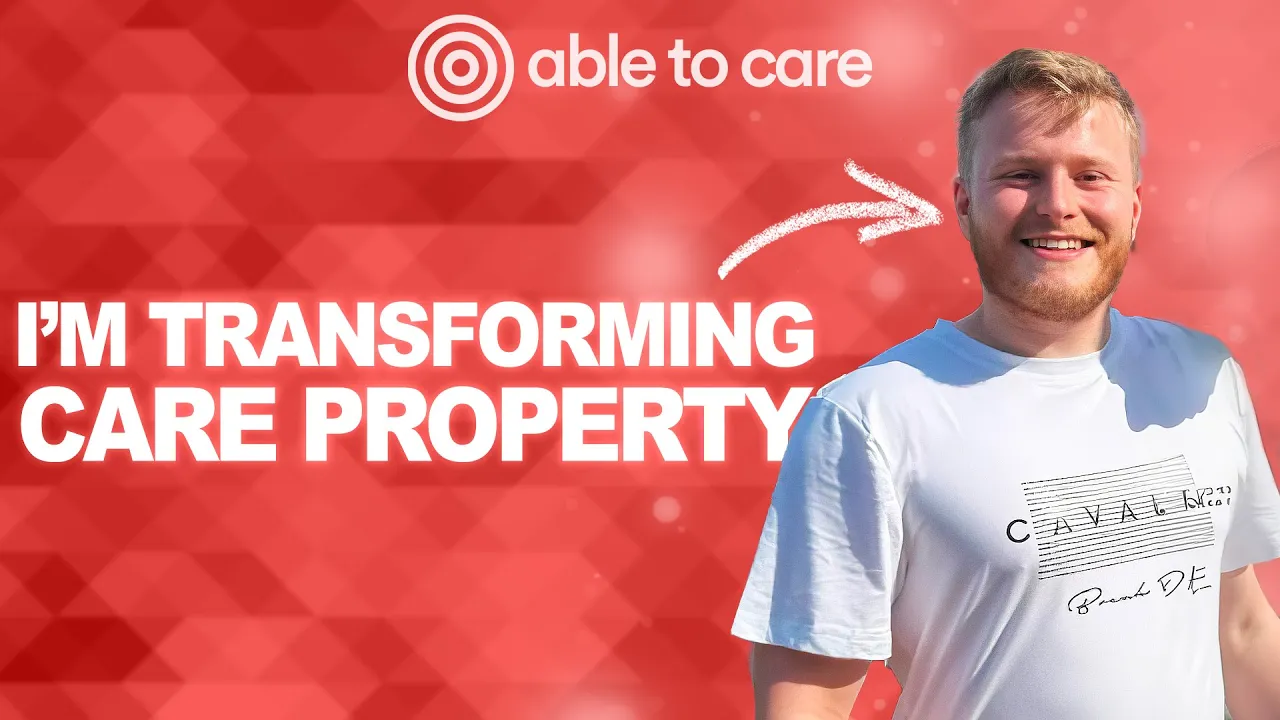
In this episode of the Able to Care Podcast, I’m joined by Ben Gyles, co-founder of Urban Nest Property Solutions – a social property business working in Croydon to bridge the gap between landlords, councils and care providers. Ben’s core belief is simple and powerful: homes are not just buildings – they’re part of the care.
Ben works alongside his partner Silvia Costa, a trauma-informed therapist, bringing a fresh lens to supported housing and care pathways. Together, they’re exploring what changes when housing is designed not just for access and safety, but also for regulation, recovery and long-term stability.
If you’re supporting someone who’s struggling, it’s easy to focus on behaviour, motivation, or “engagement”. But Ben shares stories that point to a different question – what’s happening around the person that makes regulation harder?
Housing instability creates unpredictability, and unpredictability fuels stress. For children and young people, that often shows up as behaviour – not because they’re “being difficult”, but because their world feels unsafe or constantly shifting. In the episode, we come back to a principle many of you will recognise – be a better detective than judge.
Ben doesn’t pretend there’s a quick fix – but he does push for clearer thinking. One of the biggest themes is transparency: if councils are constrained by policy and funding, the public needs to understand where the blockage really is. Otherwise we keep blaming the nearest target and nothing changes.
We also talk about the importance of speaking up – persistently and strategically. Ben’s advice for advocates is blunt (and oddly encouraging): talk to everyone. Not just the “right” person – anyone who can open a door.
Ben also shares why he started The Housing Partnership Forum on LinkedIn – a free space to connect people across housing, care, councils and the private sector, so ideas and solutions don’t stay locked inside closed circles.
If a home is part of the care, why do we keep treating housing like an afterthought?
If this episode resonates, please share it with someone who needs it – a parent, a carer, a teacher, a provider, a landlord, a commissioner. The more people join up the dots, the harder it becomes to ignore.