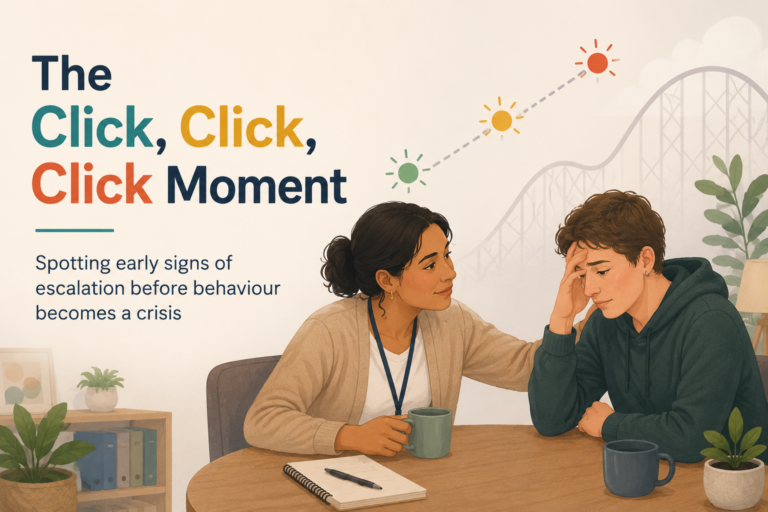
The Click, Click, Click Moment -Free Behaviour Escalation Guide
A free practical guide for parents, carers and professionals on spotting early signs of escalation before behaviour becomes a crisis.
Learn how to notice small signals early, reduce pressure, and respond with calm, connection and regulation before behaviour reaches crisis point.
The Click, Click, Click Moment is a free practical guide for anyone supporting people whose behaviour may escalate when they feel overwhelmed, distressed, anxious or unsafe.
Behaviour rarely comes from nowhere. Before things become big, there are often small signs that someone is starting to struggle. These might include fidgeting, pacing, repetitive questions, snapping at small requests, restlessness, avoidance, withdrawal or becoming more resistant.
This guide uses the simple rollercoaster metaphor to explain early escalation. At the bottom of the rollercoaster, there is still time to pause, change direction, slow things down or offer support. At the top, the ride has already started.
Created by Able Training, this resource is ideal for:
Parents and family carers
Foster carers and residential care staff
Teachers, SEN staff and school leaders
Adult social care staff
Dementia care teams
Support workers and professionals working with behaviours that challenge
The aim is not to blame, control or “catch” the person doing something wrong. The aim is to notice what their behaviour may be trying to tell us, so we can respond earlier with connection, calm and regulation.
Download your free copy by completing the short form on this page.
What's in this guide?
What the “click, click, click” moment means
How to spot early signs of escalation before behaviour becomes a crisis
Why behaviour rarely comes from nowhere
Common early warning signs, including restlessness, pacing, snapping, avoidance and repetitive questions
What behaviour may be communicating underneath the surface
Why logic, correction or reasoning may not work too soon
How to lower demand and raise connection
How to name what you see without judgement
Simple regulating actions that may help someone begin to settle
Why avoiding power contests can reduce further escalation
A quick reflection checklist to help you plan earlier support next time