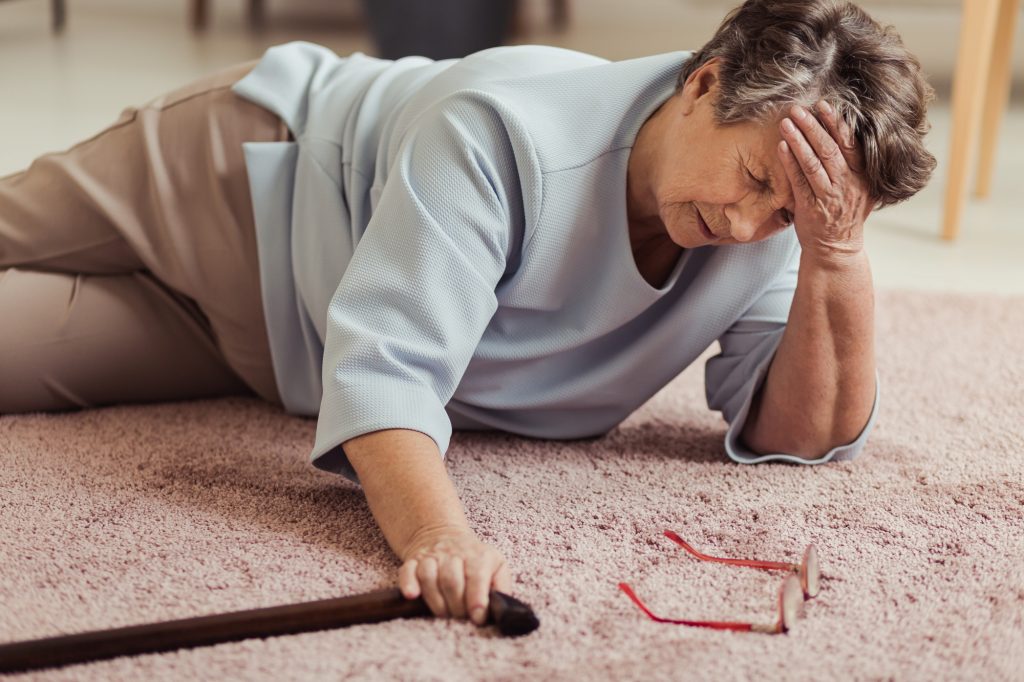

Prevention of falls, elderly woman fallen on floor.

Prevention of Falls

Our Prevention of Falls course enables attendees to gain knowledge regarding what is meant by falls and allows understanding of what are potential consequences of a fall.

"*" indicates required fields

This field is for validation purposes and should be left unchanged.

Trusted by over 1000 businesses throughout the UK

Learn to recognise risk factors associated with falls and understand methods of prevention and risk assessment.

What is the definition of a fall? What is duty of care? What is the Health & Safety at Work Act? What are Health & Safety regulations? What is a risk assessment? Why are older people more likely to fall? What are the consequences of a fall? What is Osteoporosis? What are some of the risk factors for a fall? How can I manage risk? What action needs to be taken after a fall has happened?

Our Prevention of Falls course will help you to answer the questions above and more.

1/3 of people over the age of 65 have a fall which requires hospital treatment every year. Half of individuals in care will fall each year

Through our Prevention of Falls course, you will gain an understanding of what is meant by falls and understand the potential consequences of a fall as well as how to manage risk and actions to be taken if a fall occurs.

What you'll learn.

  • What is meant by falls in the workplace.
  • Understand the risks associated with older people and falls.
  • Be aware of risk factors and potential consequences of falls.
  • Recognise methods of prevention and falls management.
  • Gain knowledge of risk assessments and the process in the event of a fall.

Who is Prevention of Falls for?

Our Prevention of Falls course is suitable for social workers, care workers, health professionals, and people working with or supporting vulnerable, frail or elderly people who may be likely to injure themselves because of a fall or slip.  It is also beneficial for people working within an environment where there is an increased likelihood or risk of injury resulting from slips or falls.

What are the learning outcomes?

By the end of the course, you will be able to…

  • To define what is meant by falls and an organisations responsibility.
  • To recognise the risks associated with older people.
  • To outline the potential consequences of falls.
  • Be able to identify increased risk factors.
  • Demonstrate hazard analysis and risk assessment in relation to falls.
  • To recognise methods of prevention and falls management.
  • Develop knowledge, skills and understand the process in the event of a fall.

Get a quote

"*" indicates required fields

This field is for validation purposes and should be left unchanged.
{{ reviewsTotal }}{{ options.labels.singularReviewCountLabel }}
{{ reviewsTotal }}{{ options.labels.pluralReviewCountLabel }}
{{ options.labels.newReviewButton }}
{{ userData.canReview.message }}

Frequently Asked Questions

What is the importance of fall prevention?
Falls prevention is crucial for maintaining independence, quality of life, and overall health, especially for older adults. Here’s why: 1. Reduced risk of injuries: Falls can lead to serious injuries, such as hip fractures, head trauma, and other broken bones. 2. Improved quality of life: Preventing falls allows individuals to maintain their independence and engage in activities they enjoy. 3. Lower healthcare costs: Falls can result in costly hospitalisations and long-term care. 4. Reduced fear of falling: By taking steps to prevent falls, people can overcome the fear of falling and maintain an active lifestyle.
Effective fall prevention involves addressing environmental, individual, and behavioural factors. Key elements include assessing home safety to remove hazards, ensuring proper lighting and secure flooring, installing bathroom safety features, promoting regular exercise, reviewing medications, managing chronic diseases, and providing vision care. Education on fall risks and the use of assistive devices also play crucial roles in preventing falls.
The 5 Ps are a framework used to improve patient care and reduce the risk of falls. They are: 1. Pain: Assess and manage patient pain. 2. Personal needs: Address toileting, hunger, thirst, and comfort. 3. Positioning: Ensure the patient is in a safe and comfortable position. 4. Placement: Keep necessary items within reach (call button, water, phone). 5. Prevention: Address any identified fall risks and implement preventive measures. By addressing these five areas, healthcare providers can significantly reduce the likelihood of falls and improve patient safety.

Related Courses

Receive a bespoke quote.

Give your team the training they need.

"*" indicates required fields

This field is for validation purposes and should be left unchanged.
Please enter a number greater than or equal to 1.
Consent to personal data processing
Receive marketing information and promotions
  • Tailored Learning: Our programs are adaptable to meet every learner’s needs.
  • Quality Assurance: Proudly accredited by UKAS ISO 9001, BILD, ICM, Qualsafe Awards, and Ability Training Awards.
  • Lasting Partnerships: Our commitment extends beyond the classroom as we aspire to forge lasting partnerships

Talk to the team

Get instant answers to all your questions

Drop us an email [email protected]

8:30am–4:30pm — Monday to Friday

(except bank holidays)
Contact Us, man using phone and laptop sat on sofa