
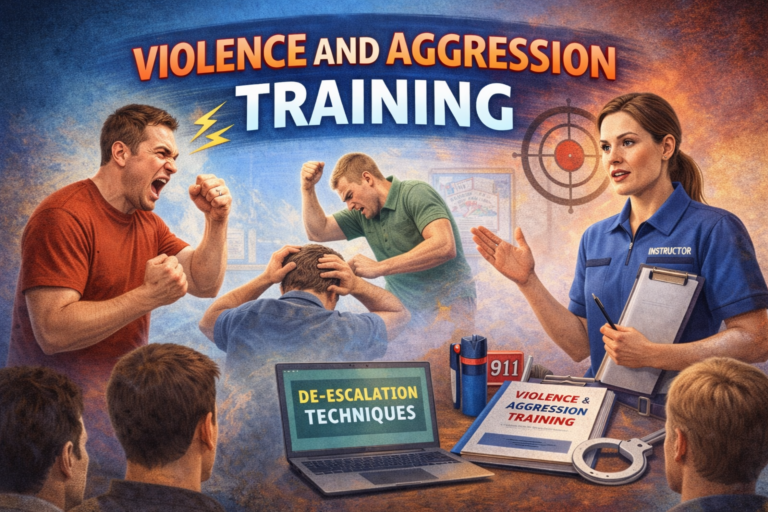
Violence and aggression in professional settings present complex challenges. Whether in healthcare, education, social care, or support services, staff are often required to manage high-risk situations involving distressed or dysregulated individuals. The impact of these incidents can be serious – physically, emotionally, and organisationally.
Violence and aggression training exists to reduce that risk. But the quality and intent of the training matter. When delivered poorly, it can reinforce fear-based responses or overly restrictive practices. When delivered well, it protects people first – supporting safety, dignity, and ethical decision-making in the most challenging moments.
Understanding Violence and Aggression in Care and Support Settings
Violence and aggression are rarely isolated behaviours. They are often expressions of unmet needs, trauma, fear, or frustration. Modern professional practice recognises that responding effectively requires understanding why behaviour occurs, not just reacting to what is happening in the moment.
Violence and aggression training therefore focuses on:
- Early recognition of escalation
- Understanding triggers and stressors
- Responding proportionately and lawfully
- Reducing harm for everyone involved
This approach shifts training away from control and toward prevention and protection.
Also Read >> The Real Impact of Effective Violence & Aggressive Training
Why a People-First Approach Matters
A people-first approach places the well-being of both the individual and the staff member at the centre of any response. It recognises that safety and dignity are not opposing priorities but are interdependent.
People-first training:
- Prioritises de-escalation over physical intervention
- Emphasises communication and situational awareness
- Reduces reliance on restrictive practices
- Supports trust and therapeutic relationships
This approach aligns with current UK guidance, safeguarding principles, and human rights expectations.
Prevention as the Foundation of Safety
The most effective violence and aggression training starts long before an incident occurs. Prevention is not passive; it requires active awareness, planning, and skill.
Training typically addresses:
- Identifying early warning signs
- Understanding environmental and emotional triggers
- Using verbal and non-verbal de-escalation techniques
- Adjusting staff responses to reduce escalation
By equipping staff to intervene early, organisations can significantly reduce the frequency and severity of aggressive incidents.
Managing Risk Without Escalation
When violence or aggression does occur, staff need clear, practical guidance on how to respond without making the situation worse. Poorly managed responses can unintentionally escalate risk, leading to injury or trauma.
High-quality training supports staff to:
- Stay calm and regulated under pressure
- Use space, positioning, and teamwork effectively
- Make proportionate decisions based on risk
- Disengage safely when possible
This emphasis on controlled, thoughtful responses helps protect everyone involved.
Legal and Ethical Responsibilities Around Violence and Aggression Training
Violence and aggression training must sit within a clear legal and ethical framework. Employers have a duty of care to protect staff, while also safeguarding the rights and dignity of those they support.
In the UK, this includes:
- Health and safety obligations
- Safeguarding responsibilities
- Human rights considerations
- Sector-specific regulatory expectations
Training providers such as Able Training design programmes that reflect these responsibilities, helping organisations demonstrate that their approach to risk management is lawful, proportionate, and defensible.
The Role of Physical Intervention Training
Physical intervention is sometimes necessary, but it should never be the focus of violence and aggression training. When included, it must be taught as a last resort, used only to prevent immediate harm and ended as soon as it is safe.
People-first training ensures that physical techniques:
- Are non-pain-compliant
- Minimise risk of injury
- Are proportionate to the situation
- Are followed by reflection and review
This ensures physical intervention remains a protective measure, not a routine response.
Supporting Staff Wellbeing and Confidence
Exposure to violence and aggression can have lasting effects on staff wellbeing. Anxiety, burnout, and loss of confidence are common when staff feel unprepared or unsupported.
Effective training helps by:
- Building confidence through clear guidance
- Reducing fear-based reactions
- Encouraging reflective practice
- Reinforcing team support and communication
When staff feel prepared and supported, outcomes improve for both staff and service users.
Training That Reflects Real-World Challenges
Violence and aggression training must reflect the realities of the environments in which staff work. Generic or overly theoretical training often fails to prepare people for real-world complexity.
People-first programmes are:
- Scenario-based and practical
- Adapted to specific sectors and roles
- Grounded in real incidents and learning
- Regularly refreshed and reviewed
This relevance is essential for meaningful risk reduction.
Ongoing Learning and Organisational Culture
Training alone is not enough. A people-first approach requires organisational commitment. Policies, leadership, and culture must reinforce what training teaches.
This includes:
- Clear reporting and review processes
- Learning from incidents rather than assigning blame
- Regular refresher training
- Alignment between policy and practice
Organisations that take this approach are better positioned to reduce incidents over time and demonstrate responsible governance.
Why Specialist Training Providers Matter
Given the complexity and sensitivity of violence and aggression, specialist training providers play a crucial role. Providers such as Able Training brings sector experience, regulatory awareness, and ethical grounding that generic training cannot offer.
Specialist training ensures:
- Techniques are evidence-based
- Content reflects current best practice
- Training aligns with safeguarding and legal standards
This expertise is essential when the stakes involve human safety and dignity.
Frequently Asked Questions (FAQs)
Who needs violence and aggression training?
Staff working in healthcare, education, social care, and support services where there is a risk of challenging behaviour.
Does violence and aggression training include restraint?
It may include physical intervention, but only as a last resort and within a wider focus on prevention and de-escalation.
How often should violence and aggression training be refreshed?
Most organisations refresh training annually or every two years, depending on risk level and sector guidance.
Protecting People, Not Just Managing Risk
Violence and aggression training should never be about dominance or control. At its best, it is about protection – protecting individuals, staff, and the relationships that support care and learning.
A people-first approach recognises that safety, ethics, and compliance are inseparable. With the right training, organisations can reduce harm, support staff confidence, and uphold dignity even in the most challenging situations.