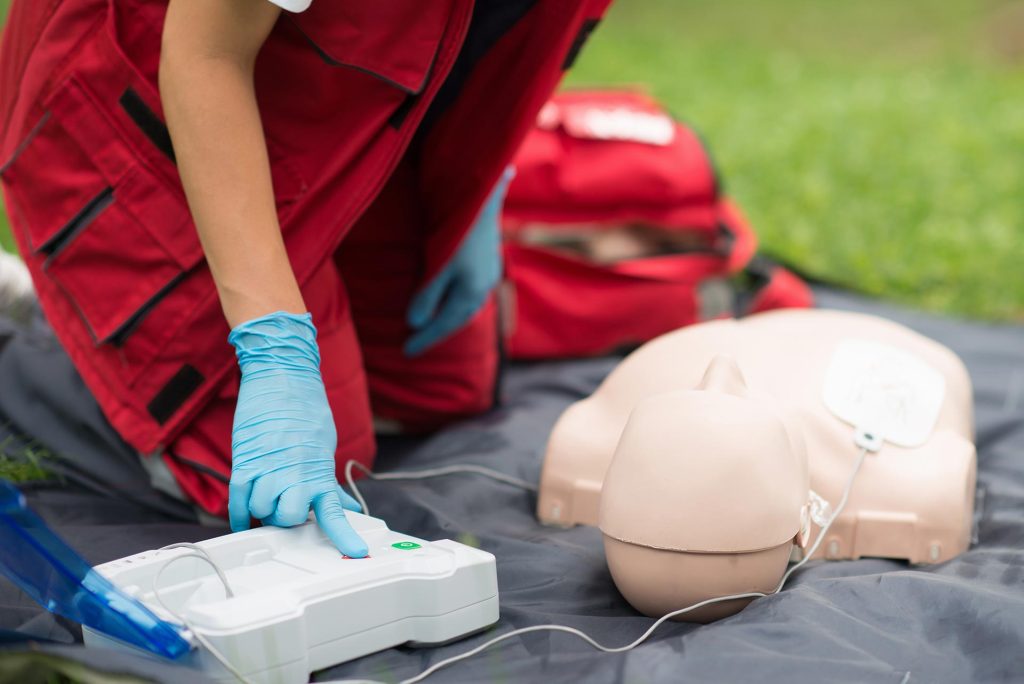

aed defibrillator

CPR & AED (Defibrillator) Training

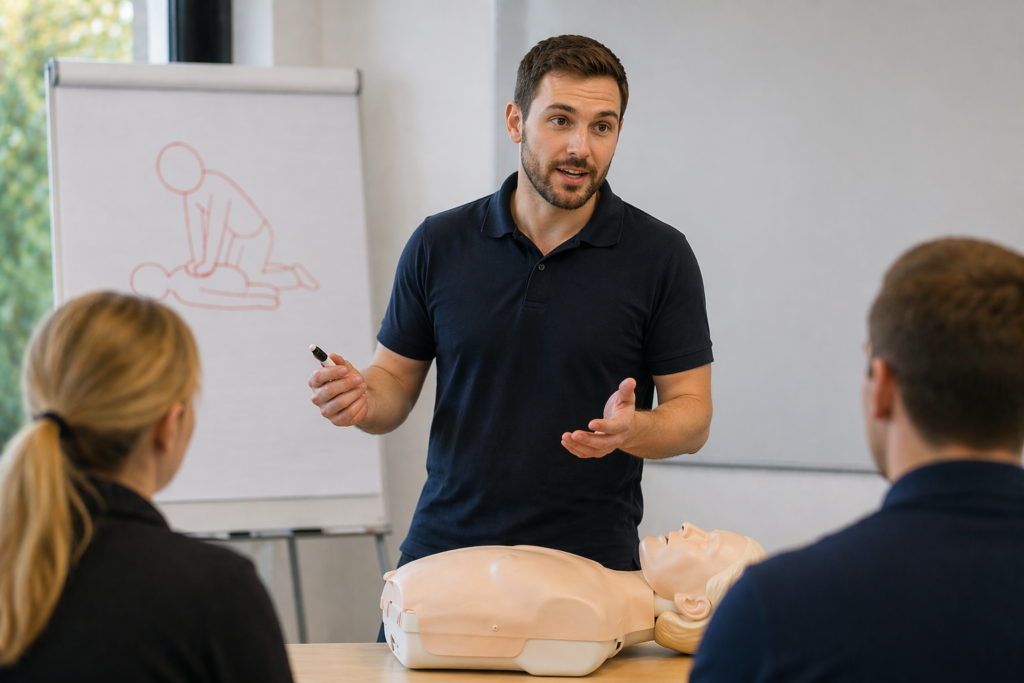
Our CPR and AED course provides essential lifesaving skills, enabling attendees to respond safely and effectively in emergency situations.

"*" indicates required fields

This field is for validation purposes and should be left unchanged.

Trusted by over 1000 businesses throughout the UK

Learn how to notice indicators of cardiac arrest and where you can find AED’s.

What is an Automated External Defibrillator (AED)? What is the chain of survival? What is a cardiac arrest and the survival rates? What to do if an individual vomits during resuscitation? What are the safety considerations we can notice before using an AED? What is Post Traumatic Stress? What is angina? What is a heart attack?

Our CPR & AED course will help you to answer the questions above and more.

During cardiac arrest every minute without CPR and defibrillation reduces a casualty’s chance of survival by 10%.

This training covers the fundamental principles of ‘basic life support’, the use of an Automated External Defibrillator (AED), the management of an unconscious casualty including placing an Unconscious Breathing Casualty in the Recovery Position and delivering treatment to a Choking Casualty using the Act Fast Choking vest.

Immediate response in medical emergencies significantly increases survival rates, and this course ensures that participants are equipped with the knowledge and confidence to act quickly and proficiently.

What you'll learn.

  • Understanding the principles of CPR and AED and its importance in emergency response.
  • Recognising emergencies, particularly those that may be life threatening, and identifying situations that require immediate intervention.
  • Step-by-step guidance on performing effective CPR (Cardio-pulmonary Resuscitation) for adults.
  • How to operate an Automated External Defibrillator (AED) safely and effectively.
  • Assessing an unconscious, breathing casualty and administering the correct intervention by completing the primary survey and then placing them in the Recovery Position if appropriate.
  • How to treat a Choking Casualty using the Act fast Choking Vest.

Who is CPR & AED (Defibrillator) Training for?

This course is suitable for anyone looking to gain essential lifesaving skills, including: Workplace first-aiders and safety personnel, Healthcare professionals and caregivers, Teachers and school staff, Community volunteers, Parents and guardians, anyone who wants to be prepared for emergency situations.

What are the learning outcomes?

By the end of this course, you will be able to:

  • Understand and apply the principles of Basic Life Support.
  • Recognise and respond to medical emergencies quickly and effectively.
  • Perform high-quality CPR on adults.
  • Operate an Automated External Defibrillator (AED) confidently.
  • Assess an unconscious casualty and position them safely in the recovery position.
  • How to treat a Choking Casualty delivering back blows and abdominal thrusts using the Act fast Choking Vest.
  • Gain the knowledge and confidence to act decisively in a life-threatening situation.

Get a quote

"*" indicates required fields

This field is for validation purposes and should be left unchanged.
{{ reviewsTotal }}{{ options.labels.singularReviewCountLabel }}
{{ reviewsTotal }}{{ options.labels.pluralReviewCountLabel }}
{{ options.labels.newReviewButton }}
{{ userData.canReview.message }}

Frequently Asked Questions

What is CPR & AED certification?
CPR and AED certification, also referred to as CPR/AED certification, equips you with the skills and knowledge to respond to cardiac emergencies. It combines two crucial life saving techniques. CPR (Cardiopulmonary Resuscitation) involves chest compressions and rescue breaths to manually circulate blood and oxygen when the heart stops beating. An AED (Automated External Defibrillator), which is portable device that analyses the heart rhythm and delivers an electric shock, if necessary, to attempt to restore a normal heart rhythm in specific cases of sudden cardiac arrest
Sudden cardiac arrest is a leading cause of death globally. By performing CPR and using an AED, you can significantly increase the chances of survival for a person experiencing cardiac arrest until emergency medical professionals arrive.
When using an AED (Automated External Defibrillator), ensure safe and effective use by avoiding these actions: Before use, call emergency services immediately for suspected cardiac arrest and use the AED promptly. Avoid using it on conscious, normally breathing individuals. During use, refrain from touching the person while the AED analyses heart rhythm. Keep the device away from wet environments to prevent electrical hazards. Stay calm and follow the AEDs clear instructions without panic.

Related Courses

Receive a bespoke quote.

Give your team the training they need.

"*" indicates required fields

This field is for validation purposes and should be left unchanged.
Please enter a number greater than or equal to 1.
Consent to personal data processing
Receive marketing information and promotions
  • Tailored Learning: Our programs are adaptable to meet every learner’s needs.
  • Quality Assurance: Proudly accredited by UKAS ISO 9001, BILD, ICM, Qualsafe Awards, and Ability Training Awards.
  • Lasting Partnerships: Our commitment extends beyond the classroom as we aspire to forge lasting partnerships

Talk to the team

Get instant answers to all your questions

Drop us an email [email protected]

8:30am–4:30pm — Monday to Friday

(except bank holidays)
Contact Us, man using phone and laptop sat on sofa