June 30, 2026 min
24 min
🎧 Listen now on: Spotify, Apple Podcasts, or watch on YouTube.
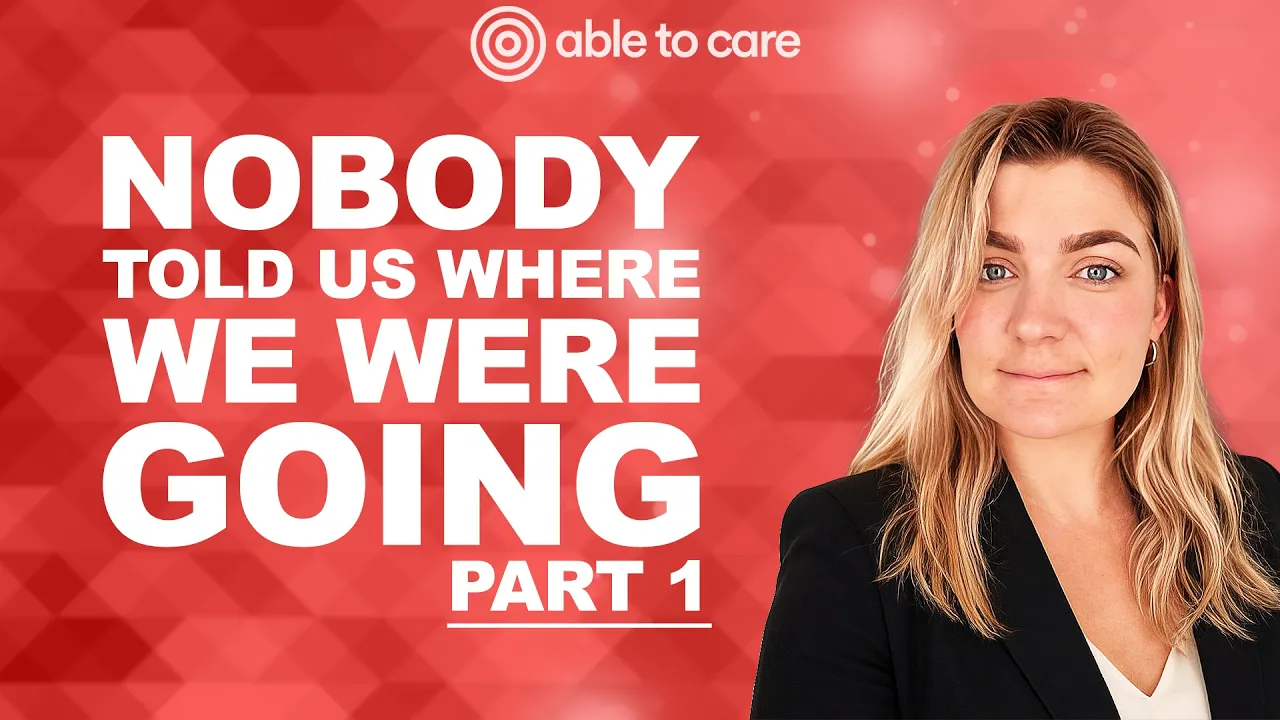
In Part 1 of this powerful two-part Able to Care Podcast special, Behaviour Specialist Andy Baker sits down with care-experienced professional Rhiannon Hughes to explore what life inside the care system really felt like from a child’s perspective.
Removed from her family at just six years old due to abuse and neglect, Rhiannon shares an honest, emotional account of entering foster care, being separated from her siblings, moving between the UK and Spain, living in residential children’s homes, and the lasting impact of trauma, grief, and instability.
Rather than focusing on policies or statistics, this conversation centres on lived experience—offering valuable insight into what children in care truly need from the adults around them.
Children entering care lose far more than a home. They often lose routines, relationships, familiar surroundings, siblings, and the sense of safety that every child deserves. Rhiannon explains how consistency from trusted adults can make all the difference, even during the most challenging moments.
Andy and Rhiannon also explore why behaviour should always be understood in the context of a child’s experiences, and why trauma-informed practice means seeing beyond the behaviour to the unmet needs underneath.
This is the first of two episodes with Rhiannon Hughes. In Part 1, we explore her remarkable personal journey through childhood trauma and the care system. In Part 2, we continue the conversation by examining how her lived experience has shaped her professional mission to improve recruitment, leadership, and care standards across children’s services.
Although this episode discusses difficult experiences including abuse, neglect, homelessness and sibling separation, it is ultimately a story of hope, resilience and purpose. Rhiannon’s experiences have become the foundation for helping improve the lives of future generations of care-experienced children.
If you’re supporting children affected by trauma, attachment difficulties or adverse childhood experiences, you may also find our Youth Mental Health Training Course valuable.