
ligature and protocol training

Ligature Awareness & Protocol

Our Ligature Awareness and Protocol course enables attendees to gain knowledge regarding ligature, risk factors and complications that can occur and the benefits of an environmental assessment and risk reduction policy.

"*" indicates required fields

This field is for validation purposes and should be left unchanged.

Trusted by over 1000 businesses throughout the UK

Learn an awareness of ligature, risk factors and how to use ligature cutters safely.

What is a ligature? What is ligature point? What is the difference between self-strangulation and hanging? What are ligature cutters? What is suicide, attempted suicide, assisted suicide and suicidal ideation? What are the risks of ligaturing? What is meant by Duty of care? What is an anchor point audit? What are warning behaviours for potential use of ligature points? What policies and procedures should be in place?

Our Ligature Awareness and Protocol course will help you to answer the questions above and more.

Through our Ligature Awareness and Protocol course, you will gain an understanding of ligature and ligature points. You will learn how to use ligature cutters. You will learn what to do post incident. You will learn what the risks and complications associated with ligaturing are. You will learn how to appropriately risk assess for anchor points.

What you'll learn.

o Understand the definitions of terms and guidelines.
o Understand the risks and complications that can occur during a serious incident.
o Outline the benefits of environmental assessment and risk reduction policy.
o Perform an environmental suicide and ligature point audit and risk assessment.
o Support good practice in assessing and removing potential ligature material.
o Safely use and store ligature cutters and follow correct procedures in the event of use both during and after.
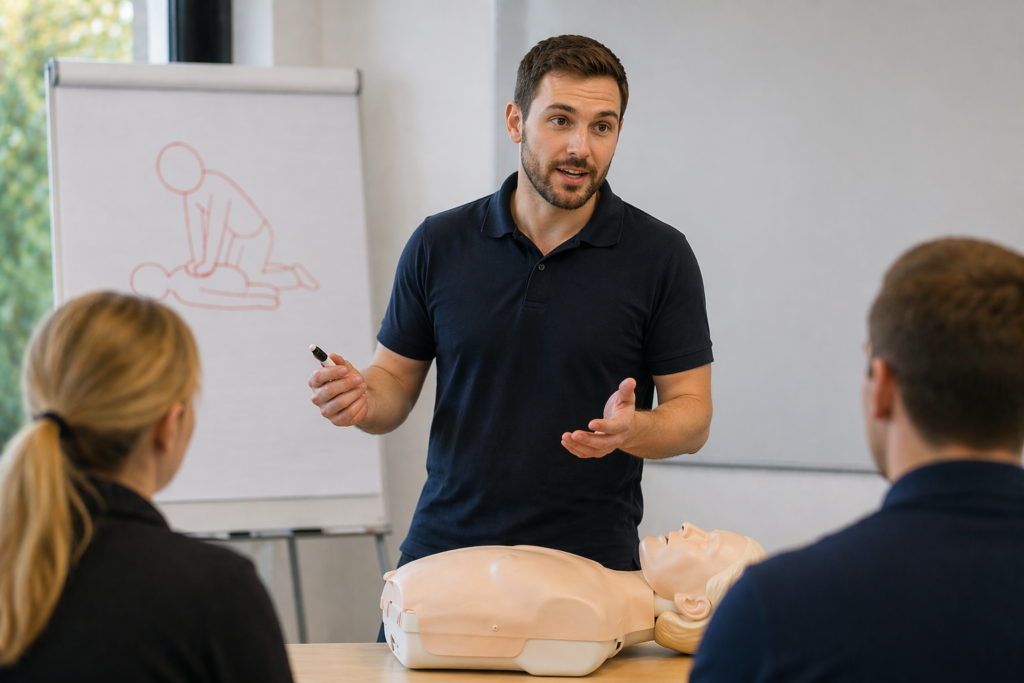
o Emergency procedures and BLS.

Who is Ligature Awareness & Protocol for?

Our Ligature Awareness and Protocol course is an essential training course for any setting that supports individuals that threaten or attempt suicide or self-harm.

What are the learning outcomes?

By the end of the course, you will be able to…
o Explain terminology and equipment, relevant to ligature protocol and policy.
o Describe the main risks of ligaturing and the main complications associated with ligaturing.
o Demonstrate how to carry out an environmental suicide and ligature point risk assessment
o Recognise safe storage and demonstrate use of ligature cutters, and the types of ligature cutters that are available
o Develop appropriate strategies and policies in responding to someone who has ligatured, including the appropriate actions to take and how to call for help.

Get a quote

"*" indicates required fields

This field is for validation purposes and should be left unchanged.
{{ reviewsTotal }}{{ options.labels.singularReviewCountLabel }}
{{ reviewsTotal }}{{ options.labels.pluralReviewCountLabel }}
{{ options.labels.newReviewButton }}
{{ userData.canReview.message }}

Frequently Asked Questions

What is the meaning of ligature awareness?
Ligature awareness simply means being aware of the dangers of ligatures and how to prevent self-harm or suicide by ligature. A ligature is any material that can be used to constrict or bind something tightly, but in this context, it refers specifically to materials that could be used for strangulation. Imagine a belt, shoelace, or bedsheet – these everyday objects can become deadly if someone is at risk of self-harm. Ligature awareness training helps people working in high-risk environments identify these dangers and take steps to prevent them.
A ligature risk assessment is a process used to identify potential hazards in an environment that could be used for self-harm. This is most commonly done in healthcare settings, particularly in behavioural health units, emergency departments and intensive care units.
Ligature points are architectural features, furniture, or other items that could be used to create a loop or noose. Some examples of ligature points: shower rails, coat hooks, pipes, radiators, bedsteads, window and door frames, ceiling fittings, handles, hinges and closures on windows and doors.

Related Courses

Receive a bespoke quote.

Give your team the training they need.

"*" indicates required fields

This field is for validation purposes and should be left unchanged.
Please enter a number greater than or equal to 1.
Consent to personal data processing
Receive marketing information and promotions
  • Tailored Learning: Our programs are adaptable to meet every learner’s needs.
  • Quality Assurance: Proudly accredited by UKAS ISO 9001, BILD, ICM, Qualsafe Awards, and Ability Training Awards.
  • Lasting Partnerships: Our commitment extends beyond the classroom as we aspire to forge lasting partnerships

Talk to the team

Get instant answers to all your questions

Drop us an email [email protected]

8:30am–4:30pm — Monday to Friday

(except bank holidays)
Contact Us, man using phone and laptop sat on sofa