
A flexible, compassionate approach to person-centred dementia care
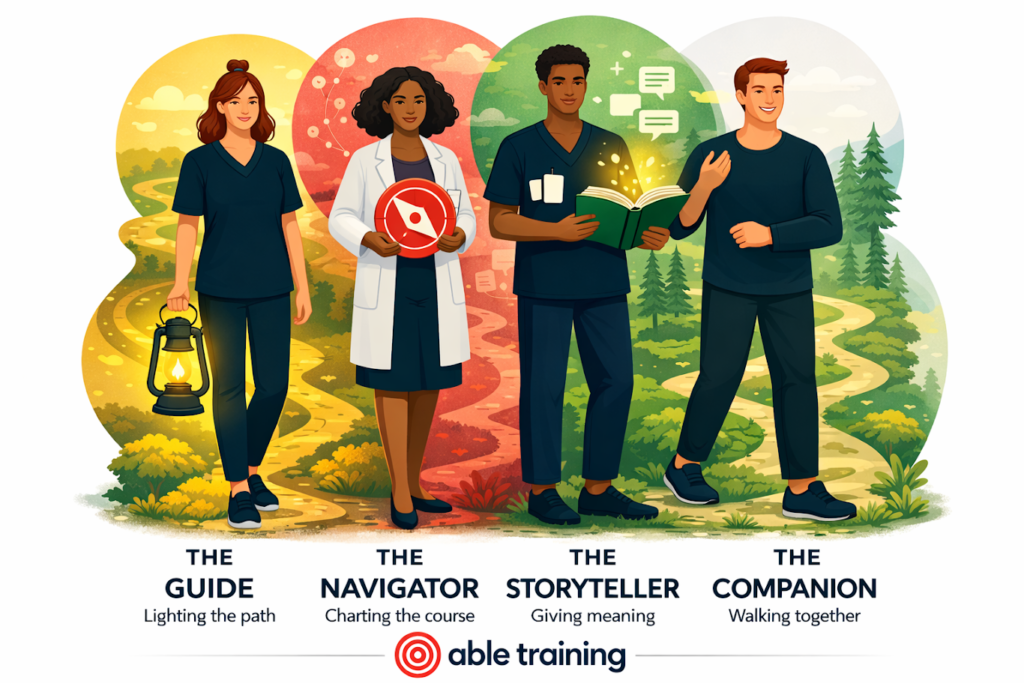
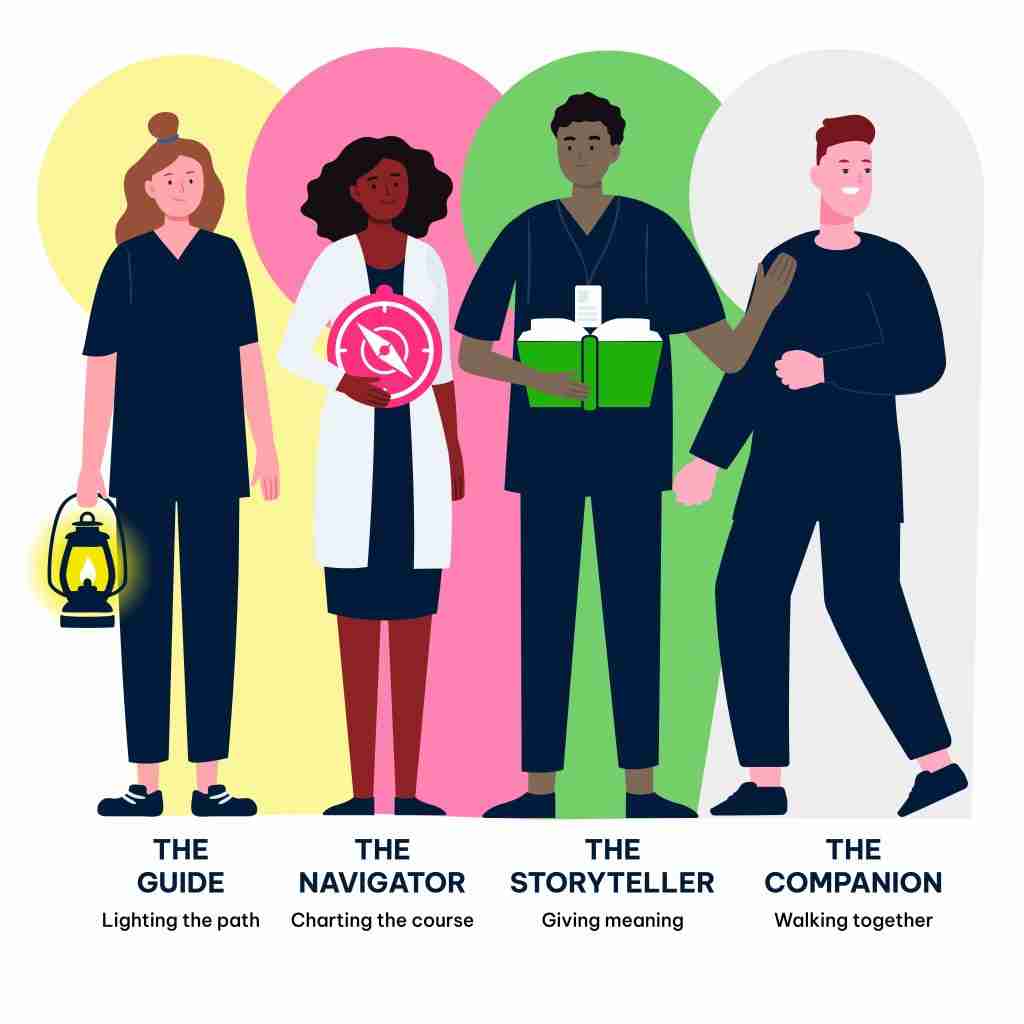
Rather than relying on one fixed method, the ACM encourages empathy and flexibility through four adaptive caregiving roles:
- 🕊️ The Guide – Encourages independence and confidence with gentle prompts.
- 🧩 The Navigator – Offers step-by-step guidance when the path is unclear.
- 💬 The Storyteller – Builds trust and calm through emotion, rhythm, and shared memory.
- ❤️ The Companion – Provides presence, dignity, and comfort when words are no longer enough.
Dementia is a journey, not a destination. The right role may change throughout the day a Navigator in the morning, a Storyteller in the afternoon, a Companion at night.
What you'll learn.
Full Day Course – Understanding Dementia and Applying the Adaptive Caregiver Model
This extended session combines dementia awareness with in-depth practical application of the model across all aspects of care.
You will:
- Understand how dementia affects cognition, emotion, and communication
- Use each adaptive role to support personal care, daily routines, and activities
- Respond compassionately to distressed behaviours
- Design meaningful engagement plans based on adaptive roles
- Improve wellbeing, dignity, and emotional safety across care settings
Who is Adaptive Caregiver Model: Supporting People Living with Dementia for?
Our Adaptive Caregiver Model course is ideal for anyone involved in dementia care, including:
- Care home staff and dementia leads
- Domiciliary care teams and support workers
- Nurses, allied health professionals, and managers
- Family and unpaid caregivers
- Activity coordinators, chaplains, and volunteers
No prior dementia training is required. The model integrates easily into existing care approaches and complements frameworks such as Kitwood’s Person-Centred Care Model and Positive Interaction approaches.
What are the learning outcomes?
- Discuss how dementia affects emotion, memory, and behaviour
- Recognise which adaptive caregiver role to use in different situations
- Demonstrate effective communication using adaptive care techniques
- Develop strategies to reduce distress and enhance wellbeing
- Apply a compassionate, person-centred mindset to every stage of care
- Download course brochure