
dementia pain management

Pain Management in Dementia

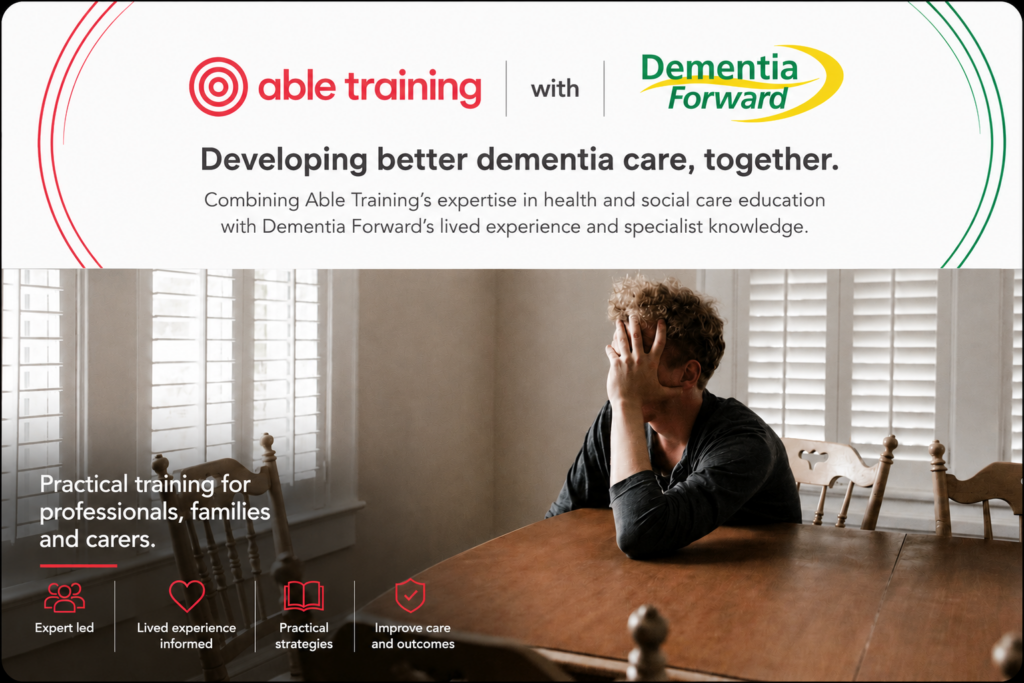
In connection with Dementia Forward, our pain management in Dementia course looks at how pain is experienced by people in different ways and how damage caused to the brain through dementia may affect a person’s experience of pain.

"*" indicates required fields

This field is for validation purposes and should be left unchanged.

Trusted by over 1000 businesses throughout the UK

Learn the importance of understanding an individual’s pain.

Dementia Forward is a trusted charity offering support, advice, and information to people living with dementia and their families. With a person-centred approach, they provide practical help, emotional guidance, and inclusive community activities across North Yorkshire. Whether navigating a new diagnosis or seeking ongoing support, Dementia Forward offers hope, understanding, and a community that truly cares.

What is pain? How can pain be managed within dementia? Why do people with dementia experience unmanaged pain? What are the different ways people with dementia may express pain? What practical methods of assessing people with dementia who are in pain?

Our Pain Management in Dementia course will help you to answer the questions above and more.

Research and studies have told us that 85% of people living with dementia in care homes are at risk of experiencing unrecognised and unmanaged pain. This often means that pain is missed, and therefore unmanaged. In this course we will explore the reasons as to this may be happening, as well as some of the difficulties and barriers around pain assessing. This course also explores different ways a person living with dementia may communicate they are pain, for example through behaviour or non-verbal communication.

Through our Pain Management in Dementia course, you will learn how to understand, care for, support, and look after an individual experiencing pain within dementia. You will learn the importance of understanding pain. You will learn how people with dementia deal with the pain.

What you'll learn.

  • Why people with dementia may experience unmanaged pain
  • Different ways people with dementia may express pain
  • Practical methods of assessing people with dementia who are in pain
  • Identifying barriers of pain management

Who is Pain Management in Dementia for?

This course if for anyone supporting people living with dementia. This can include health and social care staff, GP’s, hospital staff, physiotherapists, but also family members and carers.

What are the learning outcomes?

By the end of this course, you will be able to…

  • Explore what pain is.
  • State why pain is often missed in someone living with dementia.
  • Recognise people display pain symptoms in different ways.
  • Explain that behaviour may be a communication of discomfort or pain.
  • How to use different methods and assessment tools for identifying pain.
  • Understanding how to overcome barriers in pain management.

Get a quote

"*" indicates required fields

This field is for validation purposes and should be left unchanged.
{{ reviewsTotal }}{{ options.labels.singularReviewCountLabel }}
{{ reviewsTotal }}{{ options.labels.pluralReviewCountLabel }}
{{ options.labels.newReviewButton }}
{{ userData.canReview.message }}

Frequently Asked Questions

How do you manage pain in patients with dementia?
Non-Medical Methods include: 1. Relaxation Techniques: Music therapy, gentle massage, or calming activities can help. 2. Sensory Comfort: Adjusting lighting, and temperature, or offering soothing textures can be beneficial. 3. Maintaining Routine: Sticking to familiar routines can reduce anxiety and discomfort. Medication: Pain medication should only be prescribed by a doctor and used cautiously due to potential side effects in dementia patients.
Recognising pain in dementia patients is a bit like detective work but with some key clues. Here’s what to look out for: 1. Behavioural Shifts: Watch for increased agitation, withdrawal, moaning, or aggression – these can be signs of pain, not just dementia. 2. Physical Clues: Changes in appetite, sleep, facial expressions e.g. grimacing, or unexplained physical changes could signal discomfort. 3. Sudden Changes: A recent worsening of existing symptoms might be a red flag for pain.
Dementia makes managing pain difficult: 1. Communication Challenges: They might struggle to say they’re in pain, so healthcare staff rely on observing their behaviour. 2. Behaviour Misunderstandings: Changes in behaviour, a common dementia symptom, can be mistaken for pain, leading to missed pain signals or the wrong treatment. 3. Pain Underestimation: A misconception exists that people with dementia don’t feel pain as much. This can lead to inadequate pain relief. 4. Medication Concerns: Common painkillers can have side effects that are risky for dementia patients. 5. Training and Resources: Some staff might not be properly trained to recognise and manage pain in dementia, and resource limitations can hinder proper pain management plans.

Related Courses

Receive a bespoke quote.

Give your team the training they need.

"*" indicates required fields

This field is for validation purposes and should be left unchanged.
Please enter a number greater than or equal to 1.
Consent to personal data processing
Receive marketing information and promotions
  • Tailored Learning: Our programs are adaptable to meet every learner’s needs.
  • Quality Assurance: Proudly accredited by UKAS ISO 9001, BILD, ICM, Qualsafe Awards, and Ability Training Awards.
  • Lasting Partnerships: Our commitment extends beyond the classroom as we aspire to forge lasting partnerships

Talk to the team

Get instant answers to all your questions

Drop us an email [email protected]

8:30am–4:30pm — Monday to Friday

(except bank holidays)
Contact Us, man using phone and laptop sat on sofa