
oral health dementia

Oral Health in Dementia Course

In connection with Dementia Forward, our Oral Health in Dementia Care course enables attendees to understand the importance of mouth care and oral hygiene in the elderly.

"*" indicates required fields

This field is for validation purposes and should be left unchanged.

Trusted by over 1000 businesses throughout the UK

Learn the importance of oral health in elderly care and strategies to promote it.

Dementia Forward is a trusted charity offering support, advice, and information to people living with dementia and their families. With a person-centred approach, they provide practical help, emotional guidance, and inclusive community activities across North Yorkshire. Whether navigating a new diagnosis or seeking ongoing support, Dementia Forward offers hope, understanding, and a community that truly cares.

What is oral hygiene? Why is oral hygiene important? Who is most at risk of poor oral hygiene? What are the effects of ageing on oral health? What is an oral assessment? What is an oral hygiene care plan? How can oral hygiene be maintained? What are the signs of a healthy mouth? What is Glossitis? What is periodontal disease? What are ineffective oral care agents? What are effective cleansing solutions? How can medication impact oral health? Can nutrition deficiencies impact oral health?

Our Oral Health in Dementia Care course will help you to answer the questions above and more.

Through our Oral Health in Dementia Care course, you will gain an understanding of what oral hygiene is and how to support someone living with dementia to maintain oral care. You will learn normal mouth anatomy and understand the effects of aging and medication on oral health. You will learn how to provide appropriate oral care and understand common oral problems, making informed choices for oral care agents.

What you'll learn.

  • What is oral health and why is oral hygiene important.
  • List the risk factors of poor oral hygiene.
  • Describe the normal anatomy and pathology of the mouth.
  • Be aware of the effects of medication on oral health.
  • Understand common oral problems.
  • Gain knowledge of strategies to provide appropriate oral care for people living with dementia.

Who is Oral Health in Dementia Course for?

Our Oral Health in Dementia Care, in connection with Dementia Forward, is designed for anyone supporting someone living with dementia. It provides the knowledge, skills, and confidence to maintain oral hygiene and health in a person-centred approach.

What are the learning outcomes?

By the end of the course, you will be able to…

  • List the anatomy and pathology of the mouth.
  • Explain the effects of aging on oral hygiene.
  • Describe and carry out an oral assessment.
  • Describe the signs of a healthy mouth and how to maintain oral hygiene.
  • Develop knowledge, skills, and person-centred strategies to deliver appropriate oral care for someone living with dementia to minimise distress and resistance to oral health.

Get a quote

"*" indicates required fields

This field is for validation purposes and should be left unchanged.
{{ reviewsTotal }}{{ options.labels.singularReviewCountLabel }}
{{ reviewsTotal }}{{ options.labels.pluralReviewCountLabel }}
{{ options.labels.newReviewButton }}
{{ userData.canReview.message }}

Frequently Asked Questions

How does dementia affect oral health?
Dementia can severely affect oral health by impairing self-care routines, communication about dental issues, and physical abilities needed for proper hygiene. Swallowing problems can also complicate the use of oral care products. This can lead to plaque buildup, gum disease, and tooth decay, causing pain, discomfort, and nutritional challenges. Additionally, dental issues can negatively impact social interactions and overall quality of life.s.
Dementia patients struggle with oral hygiene due to memory issues, difficulty communicating pain and physical limitations. This can lead to tooth decay, gum disease, and discomfort. To help use soft brushes and consider fluoride-free toothpaste if swallowing is difficult. Remove dentures at night and clean them with a soft brush and denture cleanser. Catch problems early with regular dentist trips and get professional advice. Predominantly use techniques that work for the patient’s abilities.
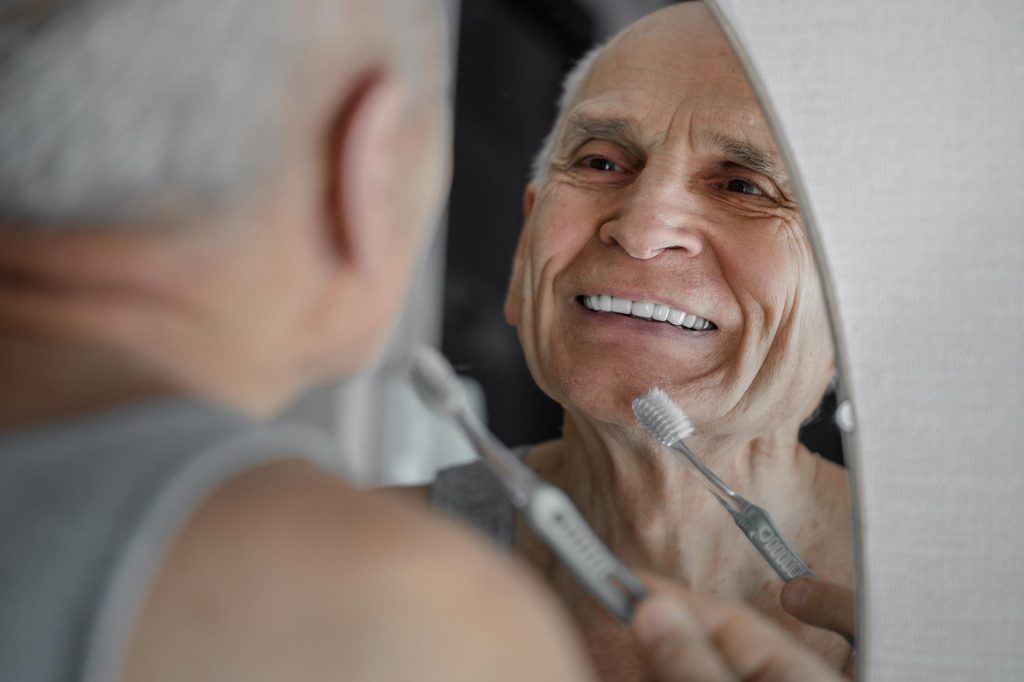
Getting someone with dementia to brush their teeth requires patience and a gentle approach. Make brushing a regular part of their day. Show them how it’s done and praise their efforts. Use a soft, child-sized brush and focus on a gentle clean. Explore wipes, finger brushes, or dentist-approved mouthwash if needed. Let them have some autonomy e.g. picking a toothpaste flavour or brush colour if possible.

Related Courses

Receive a bespoke quote.

Give your team the training they need.

"*" indicates required fields

This field is for validation purposes and should be left unchanged.
Please enter a number greater than or equal to 1.
Consent to personal data processing
Receive marketing information and promotions
  • Tailored Learning: Our programs are adaptable to meet every learner’s needs.
  • Quality Assurance: Proudly accredited by UKAS ISO 9001, BILD, ICM, Qualsafe Awards, and Ability Training Awards.
  • Lasting Partnerships: Our commitment extends beyond the classroom as we aspire to forge lasting partnerships

Talk to the team

Get instant answers to all your questions

Drop us an email [email protected]

8:30am–4:30pm — Monday to Friday

(except bank holidays)
Contact Us, man using phone and laptop sat on sofa