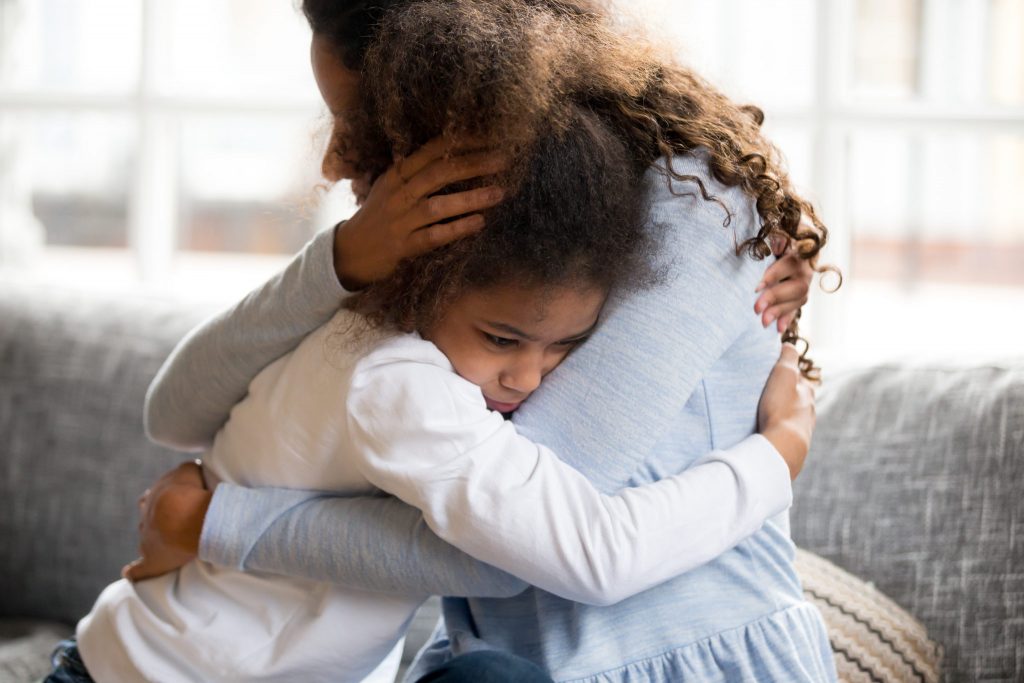

PTSD Children, young girl hugging mother.

PTSD in Children

Our PTSD in children course enables attendees to grasp the basic principles of trauma, to be aware of how it can affect children and to approach and act on situations that may arise.

"*" indicates required fields

This field is for validation purposes and should be left unchanged.

Trusted by over 1000 businesses throughout the UK

Learn the what PTSD is and recognise the symptoms.

Post-traumatic stress disorder (PTSD) is a mental health condition that can develop after a person has experienced or witnessed a traumatic event. The event may involve actual or threatened death, serious injury, or sexual violence, and can lead to persistent, intrusive, and distressing memories or feelings. 

What is PTSD? What are the symptoms of trauma? How do inhibitors and stressors effect someone’s behaviour? Why do I need to know about brain development? How do children’s brains change when experiencing trauma? How does disassociation affect the child? How can you recover from PTSD? What is co-morbidity and how does it apply to PTSD? How can I help someone with PTSD? What is secondary traumatic stress?

Our PTSD in children course will help you to answer these questions and so much more.

­One in 13 children and young people in the UK will suffer from PTSD at some point during childhood.


What you'll learn.

  • Identify possible causes of PTSD.
  • To recognise the impact of traumatic stress on child development.
  • Understand how PTSD affects children and adults differently.
  • Better support a person with PTSD and recognise its impact on them in the real world.
  • To understand what people need to recover from trauma.
  • Offer trauma informed care.
  • To understand the impact of living and working with traumatised children.
  • To think about how to prevent and treat secondary stress disorders.

Who is PTSD in Children for?

Our PTSD in children course could be for anyone that works in and/or around children. This could be in education settings or leisure settings as it can affect behaviour and how specific children react to different situations. Those working in care settings would benefit also due to the higher rate of children experiencing trauma.

What are the learning outcomes?

By the end of the course, you will be able to:

  • Identify possible causes of PTSD.
  • Recognise the impact of traumatic stress on child development.
  • Understand how PTSD affects children and adults differently.
  • Better support a person with PTSD and recognise its impact on them in the real world.
  • To understand what is needed to recover from trauma.
  • Offer trauma informed care.
  • To understand the impact of living and working with traumatised children.
  • To think about how to prevent and treat secondary stress disorders.

Get a quote

"*" indicates required fields

This field is for validation purposes and should be left unchanged.
{{ reviewsTotal }}{{ options.labels.singularReviewCountLabel }}
{{ reviewsTotal }}{{ options.labels.pluralReviewCountLabel }}
{{ options.labels.newReviewButton }}
{{ userData.canReview.message }}

Frequently Asked Questions

How does PTSD affect children?
PTSD can significantly impact a child’s life, affecting their emotional, behavioural, and social development. Here’s how: 1. Emotional distress: Children with PTSD often experience intense fear, sadness, anger, guilt, and shame. 2. Behavioural changes: They may become withdrawn, irritable, or aggressive. Sleep disturbances and nightmares are common. 3. Cognitive difficulties: Children might have trouble concentrating, remembering, or making decisions. 4. Social challenges: Difficulty building and maintaining relationships due to emotional detachment or fear of rejection. 5. Physical symptoms: Headaches, stomach aches, and other physical complaints are common.
Treatment for PTSD in children focuses on helping them process the traumatic experience, develop coping skills, and reduce symptoms. Here are some common approaches: 1. Trauma-Focused Cognitive Behavioural Therapy (TF-CBT): This therapy helps children understand their feelings, develop coping strategies, and challenge negative thoughts related to the trauma. 2. Play therapy: Using play to help children express their emotions and experiences. 3. Medication: In some cases, medication may be used to manage specific symptoms like anxiety or depression. 4. Family therapy: Involving parents or caregivers in the treatment process to provide support and guidance.
Diagnosing PTSD in children can be challenging as they may express their experiences differently than adults. A mental health professional will typically conduct a comprehensive evaluation, including: 1. Clinical interview: Gathering information about the child’s symptoms, behaviour, and experiences. 2. Parent or caregiver interview: Understanding the child’s behaviour at home and school. 3. Observation: Observing the child’s behaviour and interactions with others. 4. Psychological testing: Using standardised assessments to evaluate cognitive, emotional, and behavioural functioning.

Related Courses

Receive a bespoke quote.

Give your team the training they need.

"*" indicates required fields

This field is for validation purposes and should be left unchanged.
Please enter a number greater than or equal to 1.
Consent to personal data processing
Receive marketing information and promotions
  • Tailored Learning: Our programs are adaptable to meet every learner’s needs.
  • Quality Assurance: Proudly accredited by UKAS ISO 9001, BILD, ICM, Qualsafe Awards, and Ability Training Awards.
  • Lasting Partnerships: Our commitment extends beyond the classroom as we aspire to forge lasting partnerships

Talk to the team

Get instant answers to all your questions

Drop us an email [email protected]

8:30am–4:30pm — Monday to Friday

(except bank holidays)
Contact Us, man using phone and laptop sat on sofa